Optimizing Logistics in Modern Hospitals
 15 May, 2026
Hospital logistics has evolved significantly in recent years, shifting from a purely operational function to becoming a strategic element within healthcare management. In a context marked by care pressure, the need for economic efficiency, and increasing supply complexity, logistics optimization has become a key factor in ensuring quality care and the sustainability of healthcare systems.
Today, both public and private hospitals are reviewing their healthcare logistics models, adopting new approaches based on centralization, professionalization, and the use of advanced technologies.
From Traditional Logistics to More Efficient Models
For years, hospital logistics has been managed in a decentralized way, with individual warehouses in each facility, manual processes, and a high administrative burden. This model has shown significant limitations: excess stock, risk of expiration, traceability challenges, and high internal resource consumption.
The sector’s evolution has demonstrated that efficient logistics management not only reduces costs but also directly impacts patient safety and enables healthcare professionals to focus on clinical care. Therefore, modern hospital logistics tends to adopt criteria similar to those of other advanced sectors: process-based management, standardization, inventory control, and collaboration with specialized logistics operators.

Logistics Optimization and Digitalization
One of the main drivers of change in hospital logistics optimization has been the implementation of digital tools that enable more accurate stock management and greater supply chain visibility. The adoption of information systems, smart readers, barcodes, and real-time management platforms has represented a qualitative leap in the control and traceability of healthcare products within hospital logistics.
Thanks to these technologies, hospitals can anticipate demand, reduce stockouts, minimize inventory immobilization, and improve decision-making. Digitalization has proven especially relevant in complex environments and high-demand situations, strengthening the resilience of healthcare logistics systems.
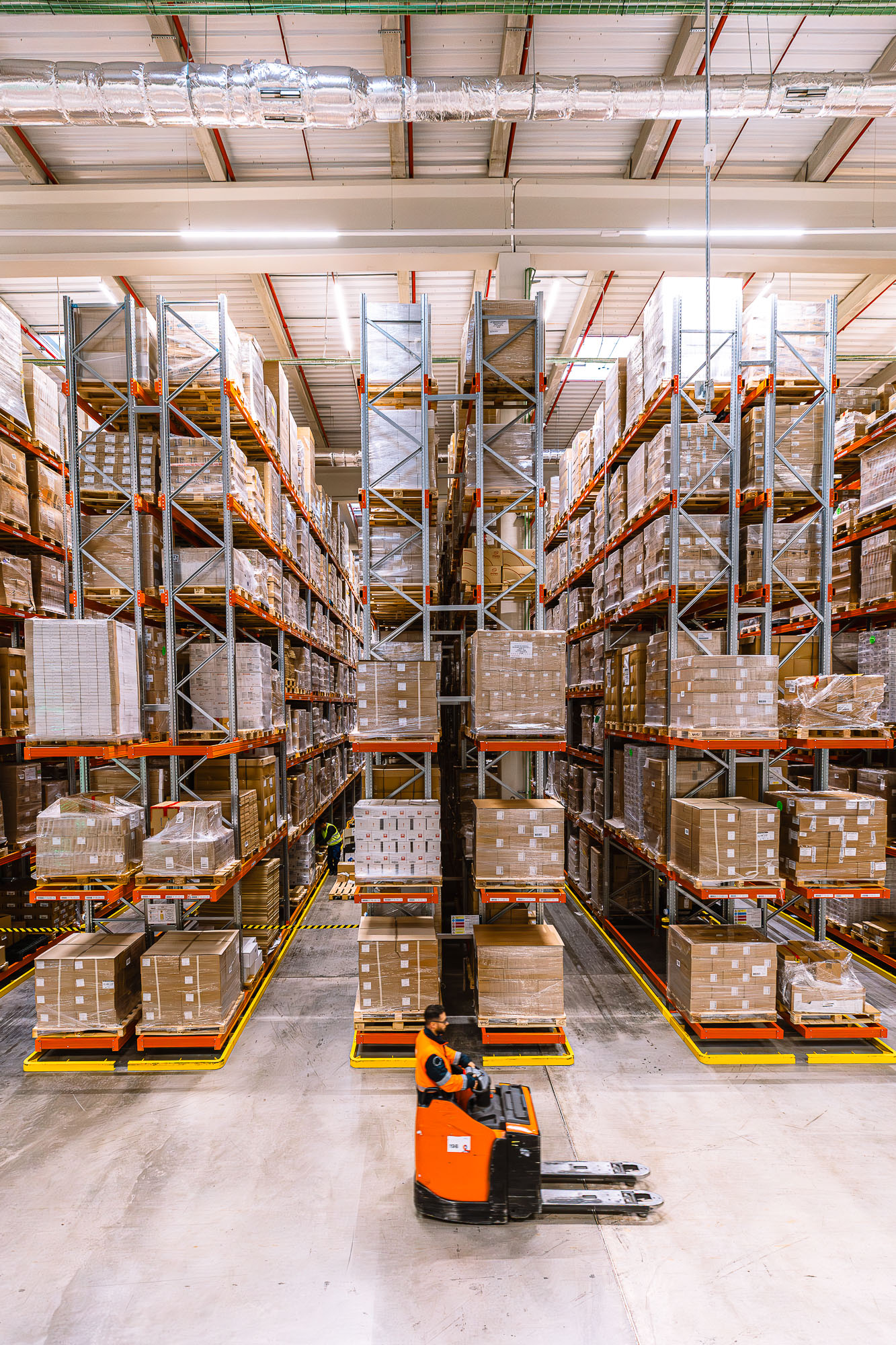
The Shift Towards Lean Flow in Hospital Logistics
At the same time, more and more hospitals are adopting lean flow models, one of the most effective practices in logistics optimization. This approach aligns supply with actual consumption needs, reducing inventory volumes and associated costs.
Lean flow provides clear benefits:
| ● Reduced stock levels and fewer expirations |
| ● Higher product turnover |
| ● Lower space occupancy within hospitals |
| ● More agile and efficient processes |
This model is particularly effective when combined with centralized management and a logistics partner with strong operational and technological capabilities.
Centralization and Hospital Logistics Distribution
Hospital logistics distribution is evolving towards more centralized schemes, especially within hospital groups. Instead of managing each hospital independently, groups concentrate procurement and logistics management in a central purchasing unit, gaining control, standardization, and efficiency.
This model significantly reduces administrative tasks, improves coordination between units, and enables a global view of consumption and stock. It also facilitates the implementation of KPIs and dashboards that enhance transparency and control.
The Future of Hospital Logistics
The trend is clear: increasingly professionalized, digitalized, and strategic hospital logistics. Collaboration between hospitals and specialized logistics operators will be key to continuing to improve efficiency, sustainability, and quality of care.
At Logista Pharma, we continue to drive advanced logistics models that deliver real value to hospitals, adapting to a constantly evolving environment and contributing to more efficient, safer, and future-oriented healthcare logistics.

FAQs
Because care pressure, the need for economic efficiency, and supply complexity mean that optimized logistics directly impact care quality and system sustainability. Professionalization and advanced management approaches reduce costs and free healthcare staff to focus on clinical care.
- Excess stock and risk of expiration
- Traceability difficulties
- High internal resource consumption
These issues increase costs and reduce agility and supply security.
Through systems, smart devices, barcodes, and real-time platforms that improve control and traceability. Hospitals can:
- Anticipate demand
- Reduce stockouts
- Minimize inventory
- Make better decisions
This strengthens system resilience.
It is a model that aligns supply with real consumption to reduce inventory and costs:
- Lower stock and fewer expirations
- Higher turnover
- Reduced space usage
- More efficient processes
Best results are achieved with centralized management and a strong logistics partner.